brand-ai.org — Where Technology Meets Business Strategy
BI = Users × Data × Algorithms
Step 1
Digital Transformation
Build the infrastructure
→
Step 2
Intelligent Activation
Activate with AI & algorithms
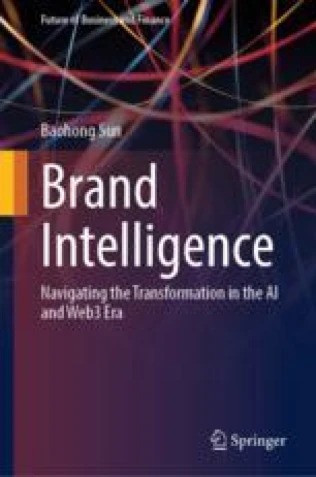
The framework for building intelligent brand-customer relationships in the age of AI and Web3.
Most companies digitized but stopped there. This book shows the critical next step: Intelligent Activation—turning infrastructure into a continuously learning system that compounds competitive advantage.
For Executives
Build an intelligence system that transforms brand-customer relationships
The BI framework and case studies that show how leading companies convert every customer interaction into compounding strategic advantage.
Start with the Framework →
For Practitioners
Diagnose your BI score, find gaps, and act
Interactive diagnostics across Users, Data, and Algorithms — plus the Brandnetics AI engine for strategic recommendations.
Try the Tools →
For Educators
Teach how technology reshapes brand-customer relationships
Research-grounded cases, chapter-aligned materials, and AI diagnostic tools designed for MBA and executive education.
Explore Teaching Resources →
Latest Insights
View all →Article
Two Systems, One Framework: China vs. U.S. Agentic Commerce
AI agents are restructuring commerce differently across the world's two largest digital economies.
Article
GEO: Optimizing for AI Search
Nine tactics for brand visibility in the age of AI agents and generative search.
Research
How Competition Shapes Recommendation Algorithms
New findings on exploration vs. exploitation in competitive platform environments.
Cases in Action
View all cases →Case Study
Sephora: The Complete Eight-Module Transformation
How a beauty retailer built an intelligence system across every customer touchpoint.
Case Study
KFC China: Intelligent Activation at Scale
Super-app strategy, Command Center orchestration across 10,000+ locations.
Case Study
NIO: Community as Competitive Moat
Social value and the most engaged auto community in the world.
←
→
The Leadership Shift
The mindset changes that separate intelligence leaders from digital followers
Each shift reflects a core insight from the Brand Intelligence framework.
From collecting data →
To building a Flywheel of Intelligence
Data without a learning loop is inventory. Intelligence compounds when users, data, and algorithms reinforce each other.
Ch. 4 · Brand Intelligence Architecture
From platform dependence →
To brand sovereignty
Every interaction on a borrowed platform is intelligence you don't own. The first strategic move is building your private domain.
Ch. 4 · Put-and-Take Method
From marketing campaigns →
To intelligent marketing commands
Campaigns are episodic. Commands are continuous — who to reach, what to say, when to act, where to appear, how to deliver.
Ch. 9 · The Command Center
From customer acquisition →
To three-dimensional lifetime value
Monetary value is only one dimension. Social value and data value reveal the true long-term worth of every relationship.
Ch. 3 · ULTV Framework
From digital tools →
To connected intelligence modules
Most companies have disconnected tools. Intelligence requires eight modules working as one system — the Transformation Trap awaits those who stop at tools.
Ch. 4 · Eight Modules
From human-only decisions →
To human-machine symbiosis
Algorithms generate, managers judge. Neither alone is sufficient. The winners design systems where machine thinking and human insight amplify each other.
Ch. 9 · Machine Thinking
From controlling the brand →
To participatory ecosystems
Web3 enables stakeholders to co-own and co-create. The next generation of brands won't be managed — they'll be governed.
Ch. 11 · Decentralized Brand Ecosystem
←
→
Strategy Playbook
Strategies to increase your BI across Users, Data, and Algorithms
Each strategy maps to a dimension of BI = Users × Data × Algorithms. New strategies added as the knowledge base grows.
Users
Put-and-Take Method
Use public platforms for reach and awareness. Convert attention into private-domain intelligence. The strategy that funds the flywheel.
Ch. 4, 10 · Omni-Domain Strategy
Algorithms
Generative Engine Optimization
Nine tactics to make your brand visible when AI agents answer customer questions instead of search engines.
Ch. 10 · GEO Framework
Data
Five Command Center Functions
Customer Data Platform + Algorithmic Decision Center. Translate raw data into who, what, when, where, how decisions in real time.
Ch. 9 · Intelligent Marketing
Data
Product-Service-Experience Continuum
Smart products don't just serve — they sense, learn, and personalize. Shift from selling objects to delivering evolving experiences.
Ch. 7 · Smart Products
Users + Data
Five Categories of Community Data
Online communities generate preference, behavioral, social, attitudinal, and transactional data. Most brands harvest only one.
Ch. 5 · Online Community
Algorithms
Six Properties of Hyper-Personalization
Beyond basic targeting: real-time, contextual, predictive, cross-channel, privacy-respecting, and continuously learning.
Ch. 9 · Intelligent Marketing
Users + Algorithms
Super Touchpoint + Super Transmitter
A mobile app's dual function: the richest touchpoint for experience delivery, and the most powerful transmitter of behavioral intelligence.
Ch. 8 · Mobile Applications
Users + Data
Wallet Relationship Management
In decentralized ecosystems, the wallet replaces the login. WRM is the new CRM — managing relationships through tokens, governance, and shared value.
Ch. 11 · Participatory Marketing